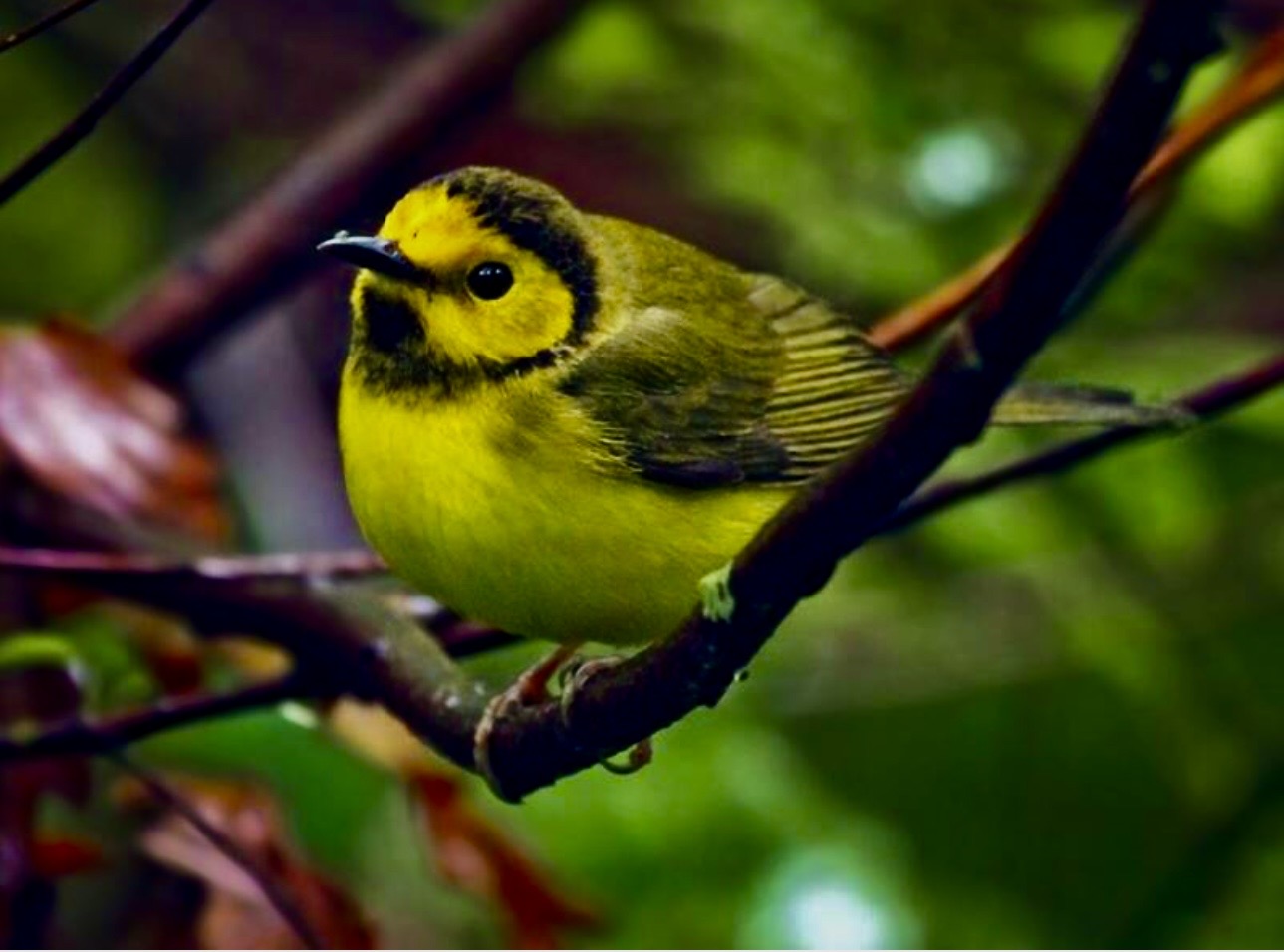
The Ecology of Courage: Where Natural Selection Meets My Own Backyard
Part 2 — Stillness under Pressure
“We are what we repeatedly do. Excellence, then, is not an act, but a habit.”
This week, I found myself reflecting on the practice of intense stillness — not the kind that lasts just a passing moment, but a deeper stillness, an intensive and attentive quiet that lingers and settles within.
How amazing and quietly blissful, can such stillness be? It can’t be explained, I suppose. It must simply be experienced—much like dawn itself, which can be witnessed, but can never be fully described.
Yet a question remains: how does one sustain such dawning peace? How does one practice stillness not occasionally, but consistently and deeply, as a way of being?
These thoughts often arrive as I step onto the balcony. It is a balcony surrounded by towering companions — the towering grace of the Monterey Cypress, the macrocarpa, the gentle majesty of liquidambar styraciflua, the berry-bearing grace of arbutifolia, the wandering limbs of the pepper tree, the quiet elegance of menziesii — and a few more quiet companions guarding the sky.
Their branches lean close — almost intrusively so — stretching toward the balcony, stretching closer still, as though stirred by a quiet curiosity. As if the trees themselves were witnesses to this quiet beginning, my humble ritual that unfolds there each morning.
And then dawn begins its quiet work of revealing itself.
The sunlight does not arrive all at once. It gathers slowly along the branches, touching leaf and bark before reaching the railing. The balcony fills with the first sounds of waking life — soft chirps, delicate calls, melodies rising gently with the sun. Morning becomes an avian overture, each note belonging to some unseen feathered stranger.
In such moments one goal quietly forms in the mind: to let this scene last as long as possible.
Yet the mind is rarely obedient. It is far easier to imagine peace than to inhabit it. We say “easier said than done,” but perhaps the greater difficulty lies even earlier — in the act of holding a vision of stillness without letting it scatter. Is that difficulty universal, or merely my own clumsy wrestling with my own imagination?
Click below to Continue Reading!
The morning becomes a gentle, spectacular oblivion — a moment where thought loosens its grip and the world is carried only by the rising voices of unseen birds.

Just as silence begins to linger, another sound arrives — tiny feet landing on the railing, wings fluttering in bursts of color, little troublemakers announcing themselves with cheerful insistence.
What does one do when the silence of dawn is interrupted by such spirited visitors? In my experience, one feels fortunate.
Those tiny feet belong to birds arriving for breakfast seeds — some bold, some shy, many somewhere in between. The timid ones gather a seed and retreat quickly to the branches, where they eat in secret comfort.
Then, inevitably, another personality appears.
The squirrel.
Not just any squirrel, but the indignant one — the one clearly irritated by the simple fact that birds possess wings. While they glide effortlessly between branches, he must climb the tall tree beside the balcony, scramble halfway up, and perform a daring seven-foot leap to reach the goal, the mighty peanut.
A streak of indignation seems stitched into his very being. So naturally, he must be fed as well. It would seem unfair otherwise — to honor only the graceful birds while overlooking the determined climber who stubbornly refuses to surrender to gravity.
This indignant, cranky, and clumsy squirrel managed to win my heart in the middle of storm and thunder during the winter. And for that alone, he has earned a fitting pet name: Nutcase.
He begins his daily campaign even before sunrise, often before I’ve taken the first sip of my carefully crafted caffeine. And yet, despite the occasional annoyance, my admiration for his unwavering persistence slowly outweighs my frustration.
Because Nutcase did something quietly remarkable during the winter.
Among all the unwelcome squirrels that once brought chaos to the backyard—yes, those rebellious little marauders were never particularly welcome and Nutcase belonged squarely to that troublesome group. And yet, when winter settled in and the world grew quieter and harsher, he began to appear differently to me.
While the others vanished or searched elsewhere, Nutcase alone seemed to endure the season by feeding on the berries of the mighty arbutifolia at the very heart of the backyard. Watching him, one could almost feel his reluctance. The taste was surely bitter, perhaps sour—certainly far from the meal he would have chosen for himself.
And yet he persisted.
Berry after berry, through the long cold and the gray stillness of winter, he returned to them. Not with joy, but with resolve. Not out of delight, but out of necessity.

In that quiet persistence there was something unexpectedly moving. A small, indignant creature choosing survival over comfort, refusing in his own stubborn way to surrender to winter.
And somewhere between the storms and the silence of those colder days, my view of him softened. What once seemed like chaos now carried a kind of dignity. Nutcase—cranky, clumsy, and utterly determined—revealed a quiet courage that often goes unnoticed: the simple, stubborn will to endure.
In the end, it was difficult not to admire him. For sometimes the smallest, most troublesome creatures remind us that resilience does not always arrive gracefully. Sometimes it arrives scruffy, indignant, and persistent—returning, berry after berry, until spring finally comes.
Determination, it seems, can quietly dwell beneath even the most unruly, unlikely and unassuming behavior. Whatever his nature may be, one cannot help but admire—and quietly applaud—his spirited shenanigans.
Nutcase, of course, is no part of this reflection or its quiet calm. He has no clue about stillness. He defies gravity at every opportunity, waking before the sun to climb up and down the trees and the balcony, snatching peanuts, digging, hiding, and digging some more. He carries no sense of pressure, no hint of stillness—but he has earned his place in this backyard for countless reasons. And yet, the one that breaks my heart most is this:
Nutcase carries only a third of his tail. Somewhere along the way, he must have endured pain, fear, and the quiet trauma of healing alone. And yet… how is it that his spirit remains so bright, so untouchable?
I often find myself watching him high in the tall, steadfast branches of the cupresses macrocarpa, tirelessly building his little home as if nothing in the world could dim his resolve. No bitterness, no surrender — just the simple, determined rhythm of living.
And perhaps that is the quiet wonder of him. Despite everything he lost, he never lost his true nature. And that is how Nutcase — with his small wounded tail and enormous spirit — gently found his way into my heart, and into a backyard full of happy chirping—tender delicate birds.
And somewhere between the trees, the birds, the stubborn squirrel, and the slow unfolding of dawn, stillness does appear — not as perfect silence, but as a gentle awareness that the day is already unfolding beautifully, if only one pauses long enough to notice it, in the quietest hour before the sunlight.
But this reflection is not about my own stillness at dawn, nor about the restless squirrel who refuses such calm. It is about stillness under pressure.
Stillness under pressure — a discipline practiced each day by an adorable species, one of the most gentle visitors in my backyard. A small bundle of joy that almost appears divine: a round whisper of feathers. Fluffy as it pecks, cautious as it feeds, and deeply tender in the moments when it simply rests, settled into the calm of the morning.

Watching them, something within the mind softens. The backyard drifts into a gentle, almost spectacular oblivion — a small sanctuary where thought loosens its grip and worry quietly fades. In that moment, the world feels simpler, kinder, as if it has been reduced to its most peaceful elements: soft light, quiet air, and these round bundles of feathered goodness moving gently through the stillness.
But what becomes possible when one holds such a rare advantage — the gift of an edge habitat?
One may transform from a simple observer into something more: a quiet guardian. One who tends the space itself to protect and nurture a timid yet resilient species of bird.
For this is no ordinary bird. It is a species formed by gentleness — a soft-hearted creature that moves through the world with deliberate caution.
And if one happens to steward such a habitat, one may feel quietly compelled to tend the yard into something vast — open ground where feeding may unfold beneath the wide sky, yet bordered by living shields, where protective trees stand close at hand and a gentle bird may retreat between each quiet moment of feeding. Then perhaps the fear that governs its every peck of a seed can soften… and courage can quietly begin to grow.
And the species practicing this quiet discipline is a bird whose entire life seems shaped by vigilance. It feeds on open ground not out of comfort, but out of necessity — where the horizon can be watched, danger seen before it arrives.
Its stillness is not laziness. Its calm is not ignorance.
It is a stillness forged by constant threats — by generations learning that survival often belongs to the watchful. Every lowered head to peck a seed is followed by a pause. A lift of the head. A scan of the sky. Perhaps that is its quiet mastery: To live surrounded by danger…and still remain soft.
Aren’t you a little curious now—what is this adorable species I’m speaking of? Truthfully, it doesn’t really matter. Each of us carries our own most beloved and endearing species in our hearts. There’s no need to rush to identify the exact species; it’s not something we need to be overly concerned about.
What matters far more is the care we show them. Let the identity remain a gentle guessing game —— observe the hints, enjoy the curiosity — but keep your focus on the deeper purpose: understanding how we can help them thrive. Ultimately, it is our attention, our compassion, and our willingness to protect them that truly counts.
And why should it deserve our deepest attention? Because science has quietly revealed something about the lives of birds that many of us rarely stop to consider. Research across in avian ecology, one truth appears again and again: ground feeding carries real danger for many species. It is not simply a casual moment of pecking at scattered seeds. It is a moment of profound exposure—when a small life lowers its guard, and vulnerability meets the open world.

I often wonder whether we truly pause long enough to understand what science has slowly brought to light about the lives of many quiet, resilient species of birds.
Their world unfolds mostly beyond our notice, hidden within ordinary moments. Yet research gently lifts the veil, reminding us that behind every small movement — every cautious step, every lowered head while feeding — there is a life shaped by vigilance, risk, and remarkable endurance.
In many bird lineages, it is not competition for food or mates that has most powerfully shaped their lives — it is predation. A constant, unforgiving pressure that quietly molds their behavior day after day. For these fragile birds, survival is not effortless; it is a discipline of vigilance, a life lived in careful awareness of danger.
The threats are relentless. Raptors circle above as patient aerial hunters. On the ground, hidden dangers wait during the vulnerable moments of feeding. And in open habitats, where cover is scarce, every movement carries uncertainty and risk.
To live in such a world requires a quiet courage — a life shaped by watchfulness, where even the smallest moment of carelessness can carry a cost.
Every descent to the ground is therefore a calculated risk.
And yet something remarkable happens when we look at our own yards with this knowledge.
A backyard can suddenly reveal itself as a small ecological theater — a living stage where the same forces that shape wild ecosystems quietly unfold.
Food resources appear. Predator risks remain. Trees offer escape and refuge. And birds display astonishing behavioral adaptations to survive within this delicate balance.
But can any backyard simply become a safe refuge?
Not quite.

To create such a space requires attention, patience, and respect for the natural order. The yard must be shaped with care: trees positioned as living shields, feeding areas placed thoughtfully, and habitats arranged so that different species may exist in harmony with their surroundings.
Only then can a backyard become something more than a garden.
It becomes a carefully prepared sanctuary —a place where timid wings dare to land, where vigilance softens for a moment, and where the quiet intelligence of nature is welcomed with intention.
For if we invite these sacred creatures into our yards, we must also accept the responsibility of understanding the science that governs their lives —and acting accordingly.
And perhaps it is here that stillness reveals itself—not as the absence of danger, nor the luxury of perfect peace, but as the quiet discipline of remaining gentle while living beneath an unblinking world, where uncertainty never quite loosens its gaze.
The small life of this wondrous, mystery species teaches this with remarkable grace —every movement measured, every pause deliberate, every moment balanced between caution and calm.
To live this way is no weakness. It is a quiet strength — a form of courage rarely celebrated, yet endlessly practiced throughout the natural world.
Watching them, I found myself reflecting on a simple philosophical truth often expressed in a familiar way: that excellence is not a single act, but something formed through repeated practice — that what we do again and again, quietly and patiently begins to shape who we become.
Perhaps stillness is no different. Perhaps stillness, too, is something learned in this way.
Stillness, then, is not merely a single beautiful moment in the backyard. It becomes something deeper when it is practiced again and again.
Each quiet observation, each careful act toward the birds, each small moment of restraint and attentiveness slowly forms a habit of calm awareness.
In time, stillness is no longer something I seek —it becomes the quiet way in which I meet the living world that gathers gently in my own backyard, where every small life, every fragile wing, and every feathered pause invites me to slow down and listen… until I begin to realize that I belong there too, with them, within the immense stillness, quiet grace, and quiet courage of my small, timid yet resilient birds.

Stillness under pressure, then, is not merely a poetic idea —it is a biological reality written into the lives of many species of birds. To truly witness such stillness is to recognize the critical science behind it: the vigilance shaped by predators, the caution molded by generations of survival.
And once we understand this, we cannot remain passive observers. Knowledge calls for care. It urges us to shape our small corners of backyard with intention —to place trees as refuge, to prepare feeding grounds wisely, and to respect the delicate balance these creatures navigate each day.
For in the end, understanding the science is not merely about knowing more; it is about acting with gentleness so that stillness may safely exist.
And perhaps this is the deeper lesson hidden within a simple backyard: That stillness under pressure is not merely endured…it is cultivated.
Continuity continues.
Stillness endures into what comes …

When pressure settles over our lives, do we rush to escape it? —or remain still long enough to understand it?
In moments of uncertainty, what do the patterns of our responses quietly reveal about who we are becoming?
When everything around us demands reaction, what does it take to remain still —and what might that stillness reveal?
Are we shaping our responses in moments of pressure, or are those moments quietly shaping us?